Mastering Business Sales and Purchase

Introduction
Embarking on the journey of buying or selling a business is a significant event in the world of entrepreneurship.
It demands strategic planning, careful consideration, and clean uncomplicated execution. Whether you’re an experienced entrepreneur seeking to broaden your portfolio or a business owner considering an exit strategy, the complexities of business transactions can be stressful and overwhelming.
I delve into the nuances of buying and selling businesses, providing insights, strategies, and best practices to enable you to reach your goals.
Understanding the types of business transactions

Business transactions can take various forms, including acquisitions, mergers, asset sales, and equity sales.
These transactions involve the transfer of ownership, assets, liabilities, and operational control from one entity to another. Whether you’re purchasing a small family-run business or selling a large-scale enterprise, the process involves several stages.
Preparation: This involves setting your goals, conducting due diligence, and preparing the necessary documentation.
Valuation: This stage involves determining the fair market value of the business based on financial analysis, industry benchmarks, and market trends.
Negotiation: This involves negotiating the terms and conditions of the transaction, including price, payment structure, warranties, and representations.
Due Diligence: This involves conducting a comprehensive investigation of the business’s financial, legal, and operational aspects to identify risks and opportunities
Closing: This is the final stage where the transaction is finalised, legal agreements are executed, and ownership and control are transferred to the buyer.
Having completed these stages several times I suggest you have a checklist for every stage. Set up a checklist document where you can upload each piece of information and link it.
These transactions come with a lot of paperwork and information, you need a process and structure by which everything can be tracked. Maybe use Trello or Google Docs as tools.
Key Considerations for Buyers
Strategic Fit
Evaluate how well the target business aligns with your existing operations, goals, and objectives. Consider factors such as market/customer synergies, product/service offerings, geographic reach, and customer base alignment.
Also consider logistics and how your day to day life may be impacted.
Financial health of the business
Assess the target business’s financial performance, profitability, cash flow, and growth prospects. Conduct a comprehensive financial analysis, including a review of the balance sheet, income statement analysis, and cash flow forecasting.
Consider how the acquisition including the purchase price may impact your current businesses, personal finances or your lifestyle.
Due Diligence
Conduct thorough due diligence to assess the target business’s legal, financial, operational, and regulatory compliance. Engage professional advisors, including lawyers, accountants, and industry experts, to identify risks and opportunities.
These services can be expensive and are not always spot on. A number of people I know have paid big money for someone to complete due diligence and it has not been done properly. Ensure you ask a lot of questions, provide guidance on what you want identified.
Structure of the Deal
Consider the optimal deal structure based on your financing capabilities, risk tolerance, and tax implications. Explore options such as asset purchase vs. stock purchase, cash vs. equity consideration, and earn-outs or contingent payments.
If a business says they take a lot of cash do not include that in your considerations. Essentially if it’s not reported you are not taking it into consideration.
Integration Planning
If you have a business and are adding a new one you will need to develop a comprehensive integration plan to streamline operations, align cultures, and maximise synergies post-acquisition. Identify key integration milestones, assign responsibilities, and communicate openly with stakeholders.
Key Considerations for Sellers
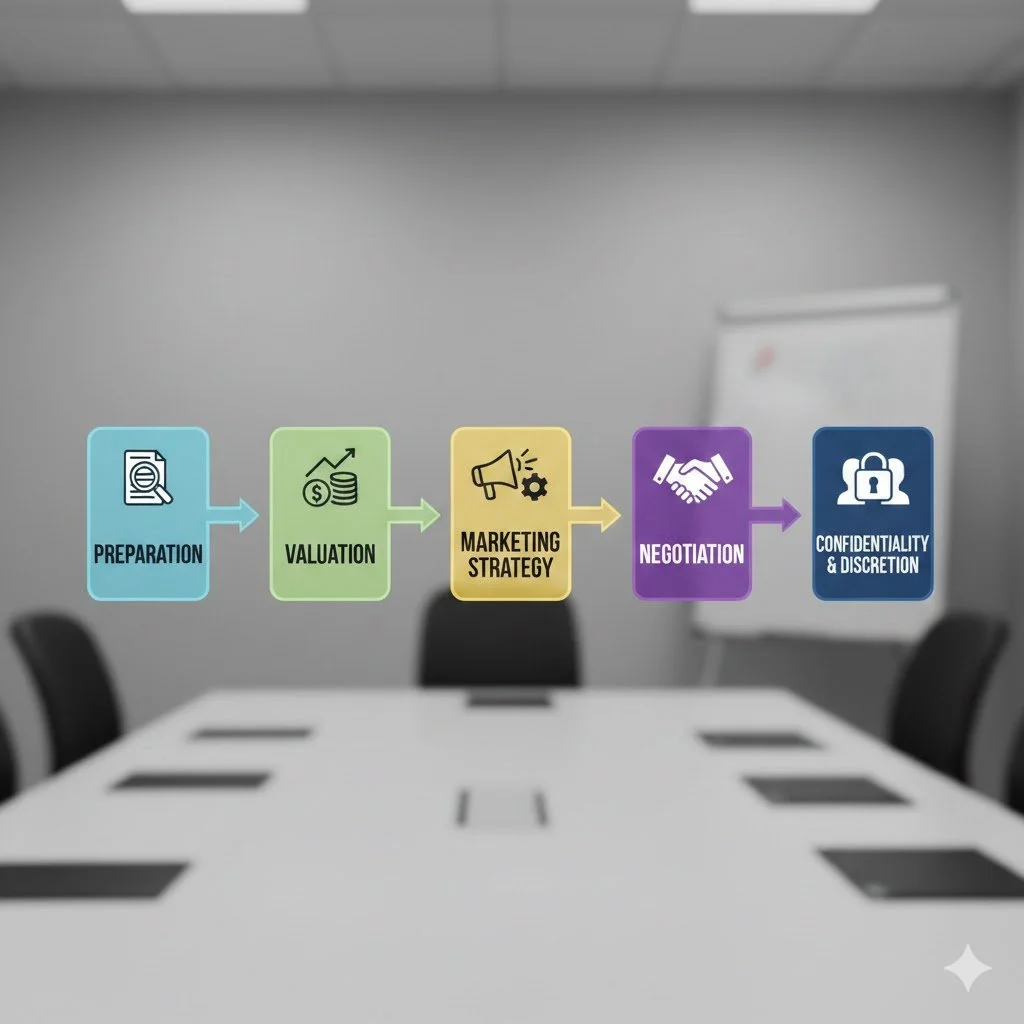
Prepare your business for sale by addressing any operational inefficiencies, legal issues, or financial discrepancies. Clean up financial records, resolve outstanding liabilities, and ensure compliance with regulatory requirements.
I suggest you start planning for the sale 6 to 12 months before you put it on the market. Speak with your accountant about what needs attention or a tidy up.
Valuation
Determine the fair market value of your business based on objective valuation methods, such as discounted cash flow analysis, comparable company analysis, and asset-based valuation approaches. Consider engaging a professional valuation expert to give you an indication of sale price. This will help with negotiations.
Marketing Strategy
Develop a comprehensive marketing strategy to attract potential buyers and generate interest in your business. Prepare marketing materials, including confidential information memorandums, executive summaries, and financial projections, to showcase the value proposition and growth potential of your business.
Ensure you have your sales pitch clear and concise. Also showcase future opportunities for the next owner as everyone likes to know there is still potential for growth in a business even a mature one.
Negotiation
Negotiate the terms and conditions of the sale with prospective buyers, including price, payment structure, warranties, representations, and closing timelines. Consider engaging a business broker to handle negotiations, advocate on your behalf and maximise value. Remember you still need to run the business while you are selling it.
Confidentiality and Discretion
Maintain confidentiality throughout the sales process to protect sensitive information and preserve business value. Implement non-disclosure agreements (NDAs) and confidentiality agreements with prospective buyers, advisors, and other stakeholders.
Best Practices for Business Transactions

Engage Professional Advisors: Seek guidance from experienced professionals, including lawyers, accountants, business brokers, and investment bankers, to navigate the complexities of business transactions. Leverage their expertise, industry knowledge, and negotiation skills to achieve favourable outcomes.
Conduct Comprehensive Due Diligence: Prioritise due diligence to uncover potential risks, liabilities, and hidden issues that may impact the transaction. Evaluate financial statements, legal contracts, customer contracts, employee agreements, and regulatory compliance to mitigate risks and ensure transparency.
Focus on Value Creation: Align your purchase or sale strategy with value creation objectives, focusing on long-term sustainability, growth, and profitability. Look beyond short-term gains and prioritise investments that enhance the intrinsic value of the business.
Communicate Openly and Transparently: Foster open communication and transparency with all parties involved in the transaction, including buyers, sellers, advisors, and employees. Establish trust, manage expectations, and address concerns proactively to facilitate a smooth and successful transaction.
Plan for Continuity and Transition: Develop a comprehensive transition plan to ensure continuity of operations and minimise disruptions during the transition period. Communicate with employees, customers, suppliers, and other stakeholders to manage expectations and facilitate a seamless transition of ownership.
Case Studies in Business Transactions
Wesfarmers’ Acquisition of Coles
This one is of particular interest as I have closely watched the rise of Wesfarmers over the last 20 years. I have always been intrigued by their business model and risk taking with acquisitions. There could be no bigger investment in Australian business at the time.
In 2007, Wesfarmers, was one of Australia’s largest listed companies. It acquired Coles Group, one of Australia’s largest retailers, for $22 billion. The acquisition was driven by Wesfarmers’ strategic objectives to diversify its portfolio and enhance its retail presence. Wesfarmers leveraged its financial resources, retail expertise, and national reach to accelerate Coles’ growth and integration into its ecosystem, unlocking synergies and creating value for both companies.
For more information on this mega transaction - Wesfarmers Acquisition of Coles
The Sale of Afterpay to Square
In 2021, Square, a leading US financial services company, acquired Afterpay, an Australian fintech company, for $29 billion. The acquisition was motivated by Square’s desire to strengthen its payment capabilities, expand its user base, and diversify its product offerings. Afterpay’s innovative buy-now-pay-later model, global reach, and growth potential made it an attractive acquisition target for Square, enabling the financial services giant to extend its dominance in the digital payment space.
For more information on the acquisition of Afterpay by Square
Conclusion
Business transactions are transformative events that require careful planning, strategic execution, and effective negotiation. They can be very stressful so set yourself up with systems and procedures to ensure nothing is missed along the way.
Whether you’re buying or selling a business, it’s essential to prioritise due diligence, engage professional advisors, and focus on your value creation objectives.

By understanding the key considerations and best practices outlined here you will have a better chance of a successful business transaction.
Take your time and work through everything.
Take a look at the services I offer for buying and selling business.
More information on business purchases, check out my buyers guide articles: